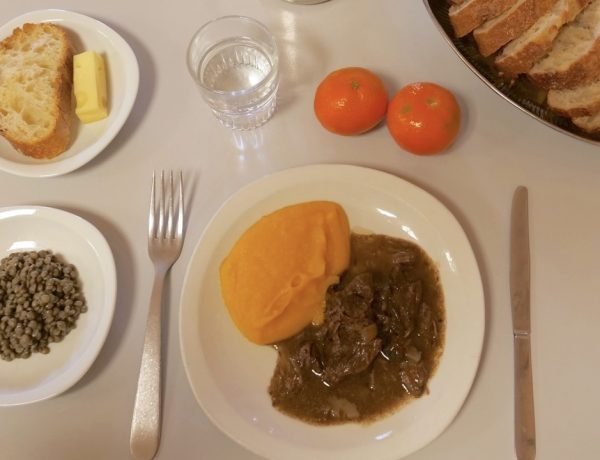


A Note Before We Begin
This story began with my very first visit to a French school cafeteria kitchen back in 2013 — but it didn’t end there.
Since that morning, I have visited French school kitchens many times: photographing prep work, observing service, interviewing staff, and even spending three full working days inside the kitchen, from early-morning prep through late-afternoon cleanup.
What follows is a composite of a decade of visits, woven together to show the routines, standards, and quiet rhythms that shape French school lunch culture — the part families never see.
Walking Into the French School Cafeteria Kitchen at Dawn
I remember arriving at 6:45 a.m. on my first visit, shuffling through the cold, dark morning toward the back door of the school. It felt impossibly early to be cooking lunch.
Inside, Cathy — the head chef — greeted me with a warm smile. Only months from retirement, she still moved with the ease of someone who knew every pot, every drawer, and every rhythm by heart.
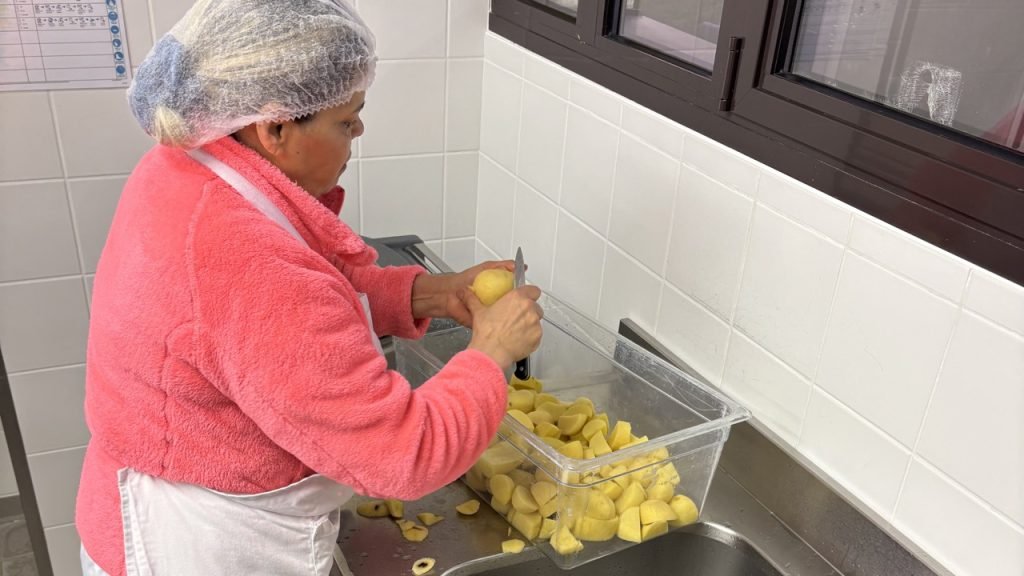
Every morning, she and her two assistants arrived before sunrise to prepare the mostly homemade lunches for more than 500 children:
- the elementary school (1st–5th grade)
- the preschoolers (ages 3–5)
- the daycare children (ages 0–3)
By noon, France’s unofficial national lunch hour, hundreds of students begin pouring in. Older kids in one room, younger kids in another — each buzzing with its own energy.
What struck me early on was how normal all this felt to the staff.
I was wide-eyed, photographing every detail, asking endless questions.
They were amused — not by the work, but by my fascination with it.
To them, this was simply the daily rhythm of feeding children well.
To me, it felt extraordinary.
For a complete overview of the menus, culture, and mealtime structure, you can start with my main guide here → French School Lunches: How They Work Today.
The Soup (and the Smell of Real Ingredients)
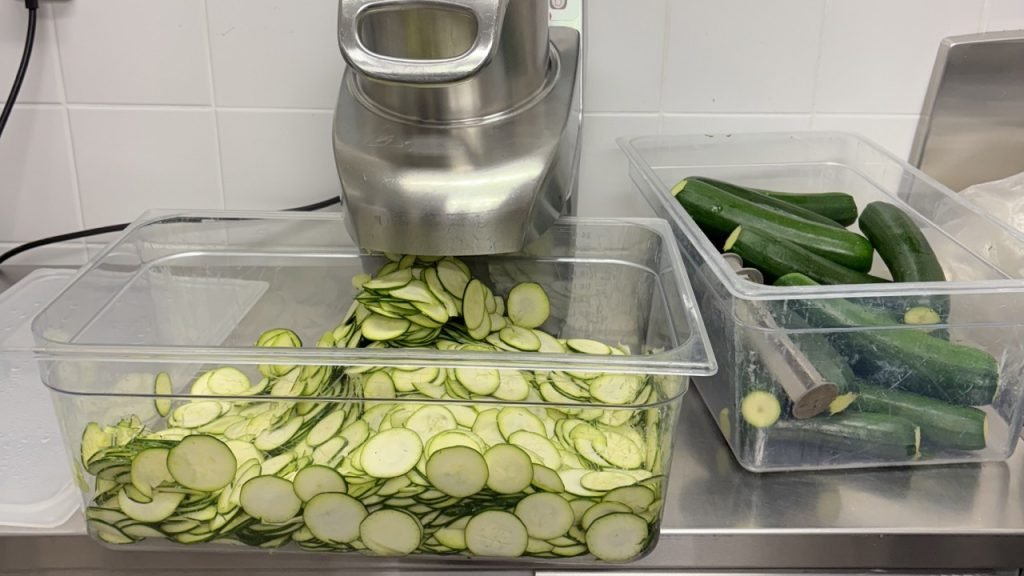
One morning, the assistants were preparing a huge batch of homemade zucchini soup. One fed zucchini through an industrial mandoline — sending perfect shreds into a giant tilting pot.
Another sautéed onions and garlic in olive oil, adding coriander, water, and quiet spices that made the entire kitchen smell like someone’s home.
The soup would be served to the elementary students and delivered to the preschool and daycare as well.
Even today, it still strikes me that the youngest children in France begin their school day with the smell of real food cooking nearby.
It shapes something.


The Inventory (and France’s Organic + Local Requirements)
While the soup simmered, Cathy moved through the pantry and walk-in refrigerator with her clipboard.
Public elementary schools in France are required to serve at least 50% local and/or organic foods, and she showed me the staples:
- local cheeses
- organic lentils
- organic pasta
- an array of organic yogurts
Deliveries followed a predictable weekly rhythm: vegetables, dairy, dry goods, and meat typically arrived once a week — sometimes on different days depending on the supplier. Only the bread was delivered daily, always fresh from the bakery down the street.
By mid-morning, crates of produce and dairy were stacked neatly in the walk-in fridge, sacks of lentils and pasta lined the pantry shelves, and the team had already mapped out what they needed for the days ahead. It was a quiet, efficient system — nothing more than the kitchen needed, nothing less.
If you want to understand the nutrition rules French kitchens must follow, I break them down here → French School Lunch: Official Nutrition Guidelines Explained.


Preparing the Rest of the Meal
With the soup underway, one assistant prepped fish for the enormous steamer cabinet.
Fresh baguettes were cut into smaller pieces.
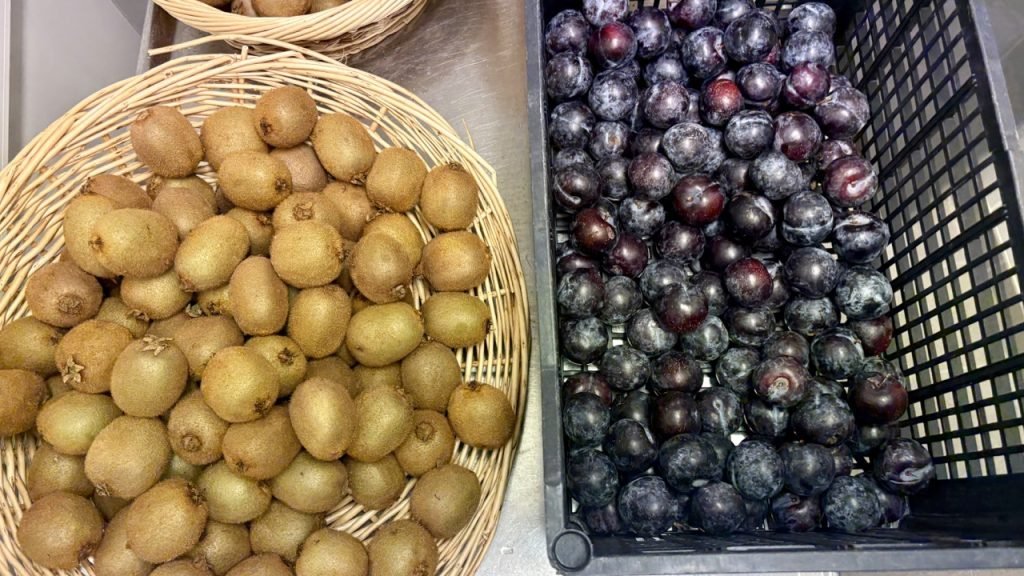
Babybel cheeses and organic apples were lined up for dessert — completing the day’s four-part meal.
Nothing gourmet.
Nothing flashy.
Just simple, recognizable food prepared with intention.
I also explain how France measures and reduces food waste inside cafeterias here → How France Is Working to Eliminate Food Waste in School Cafeterias.
Here is a real example of a full week’s cantine menu here → French School Lunch Menu in 2022.


The Staff Meal (Always Seated)
Before the students arrived, the kitchen team sat down for their own lunch — with a tablecloth and a baguette, even when rushed.
This small gesture mirrors a much larger French philosophy: meals should be eaten sitting down, with respect, even in a hurry.


The Afternoon Rhythm: Cleanup, Planning, and Ordering
Cleanup begins the moment the first class starts eating and continues long after the last.
But the workday doesn’t end there. The kitchen team also:
- reviews what children ate
- refines monthly menus
- places orders
- contacts local suppliers
- preps for the next day
Their day typically ends around 5:00 p.m.
School lunch may last 40 minutes — but producing it lasts ten hours.


A Note About Central Kitchens
Not all schools in France have on-site kitchens like the one I visited.
In many cities, a central kitchen prepares meals for several schools and delivers fresh food every morning.
Even then, the standards remain the same:
local and organic requirements, four-part meals, daily menus reviewed by a dietitian, and a sit-down lunch for every child.


What I Learned After a Decade Inside the Kitchen
Stepping into that first French school cafeteria kitchen in 2013 changed me.
But it’s the many visits since — and the long days spent working alongside staff — that taught me the most.
For ideas to improve school lunches in your own community, I put together practical suggestions here → 8 Practical Tips to Improve School Lunches in Your Community.
The staff was always slightly amused by how fascinated I was — the photos, the questions, the note-taking. For them, nothing was extraordinary. But witnessing their “normal” revealed the quiet heart of French school lunch culture.
It isn’t just the food.
It’s the people.
The routines.
The early-morning prep.
The daily intention behind feeding children well.
These behind-the-scenes moments shape how children learn to eat, explore, and trust food.
And they remind us of something important:
the habits surrounding a meal matter just as much as the meal itself.
For a wider look at the everyday French habits that support health and wellbeing, you can explore my main guide here → The French Approach to Wellbeing.
More From France
So, if you’re curious about how France nurtures healthy habits – from school lunch traditions to everyday food, movement and lifestyle – I share practical tips, stories and plenty of insider photos and videos from my corner of France. You can sign up below. Merci!