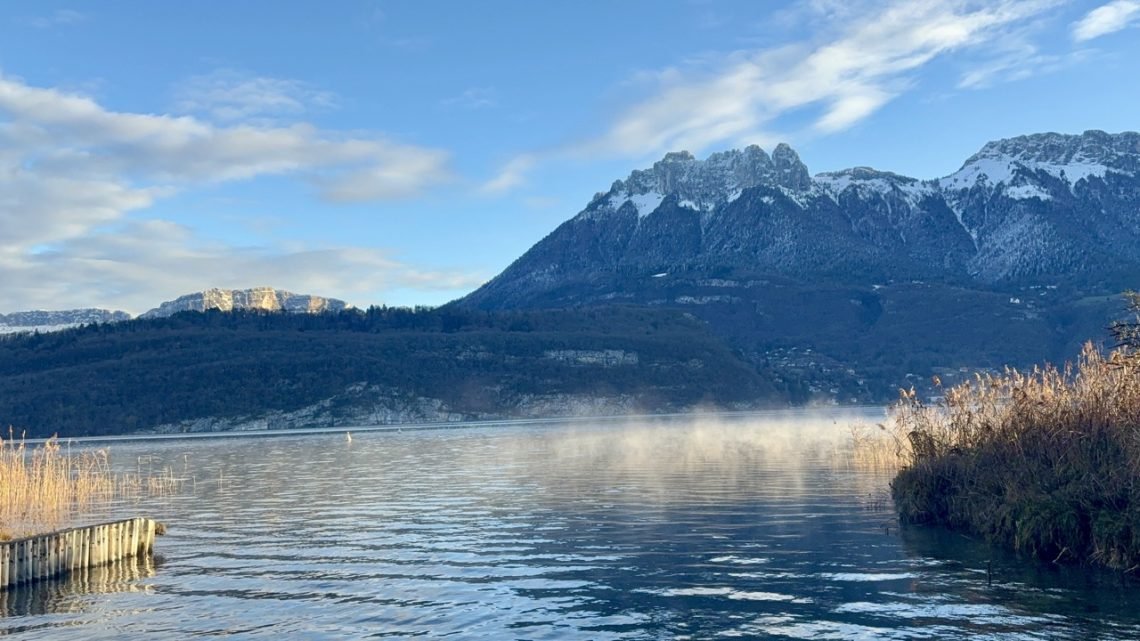

More than ten years ago, I co-founded a cold water swimming club with my American bestie, Liz. We didn’t have a grand plan or a wellbeing philosophy in mind. We were simply two swimmers who adored slipping into Lake Annecy in late spring and summer — and one day we wondered, Why not keep going when the temperature drops?
In true French fashion, we sought guidance from people who knew what they were doing. The Vikings — a legendary cold water swimming club across the lake — took us under their wing. They taught us the technical bits, the safety rules, and the culture of the sport. In hindsight, thank goodness for them.
Even with their help, we made countless mistakes in those early years. But with only a tiny handful of members, the learning curve was oddly fun. None of us imagined that winter swimming would eventually become “a thing,” let alone that our little club would grow large enough to require a waiting list.
Today, the benefits of cold water swimming are well known — better circulation, boosted immunity, improved cardiovascular health, and the kind of endorphin high that makes you feel invincible until dinner time. But the real lessons — the ones that have shaped my wellbeing over the past decade — are quieter and much more personal.
For an overview of everyday French wellbeing habits, start with → The French Approach To Wellbeing.
Join my free monthly newsletter
for everyday French life, simple habits & sustainable wellbeing.
And get The French Guide to Everyday Wellbeing straight to your inbox!
Here are the ten things winter swimming has taught me:
1. Identity is flexible
I’ll start with the obvious: I hate cold water. Truly. I’m a steaming-hot-shower kind of person, even after ten years of doing this. New swimmers often assume cold water people are built differently — as if we’re polar bears in disguise. But the truth is delightfully simple: put on a swimsuit, dip a toe, and you’re in the club. This sport taught me that self-perception is elastic — and sometimes wildly inaccurate. We talk ourselves out of new experiences all the time, simply because they don’t fit the identity we think we have.
2. The comfort zone is overrated
Winter swimming is a weekly reminder that nothing memorable happens inside your comfort zone. On windy, blistery days, I stand in my hallway thinking, There’s absolutely no way I’m going in today. And yet… almost every time, I go. Ten years of practice has made me braver in small, everyday ways. Once your body learns to handle icy water, saying yes to the rest of life feels easier.
3. It’s mental exercise as much as physical
Cold water swimming doesn’t require athletic ability, or even swimming technique. It requires managing your mind. Staying calm. Releasing the sharp spike of panic. Trusting that the body is built to tolerate short bursts of cold if done safely. It’s a masterclass in resisting the ego’s urge to push further or stay longer. More is not always better — a deeply French idea, actually.
4. Mind games help
My hardest moment is the first full immersion. The shock is enormous. Years ago I started counting down from ten, promising myself I’d be under by the time I reach one. It works every time. Then I count back up to ten to let my body settle. Tiny rituals like this make challenges feel manageable — in the lake and in life.
5. Nature is medicine
Anyone who lives in France knows the deep cultural value placed on nature — walking, moving, breathing fresh air. Cold water swimming layers all the benefits of being outdoors with the magic of the Alps and the stillness of the lake. It’s impossible not to feel your shoulders drop. It’s impossible not to feel better.
6. Wellbeing doesn’t always look like “fitness”
For years, I believed exercise only “counted” if it involved sweating, pounding the pavement, or collapsing afterward. France changed that belief, and winter swimming sealed it. Wellbeing isn’t about breaking down the body; it’s about supporting it for the long run. The older I get, the more this truth feels like a gift.
When I finally realised self-care was important, this is what I discovered → 10 Ways French Women Practice Self Care.
7. Limits are wisdom, not weakness
Pushing yourself is one part of the sport; listening to your limits is the other. I now know the exact moment when I can stay one more minute — and when I absolutely cannot. Staying in too long is unpleasant at best and dangerous at worst. Like any practice done with others, it’s easy to follow the crowd. Cold water taught me to tune in, not out.
8. Age is real — and so is ageing well
I’ve never liked the phrase “age is just a number.” Age is age. A 50-year-old is not a 30-year-old, no matter how young we feel. But ageing well is absolutely a state of mind. Our club ranges from 18 to 80+, and our oldest swimmers are often the most joyful, courageous, and steady in the water. They inspire me constantly — a French reminder that pleasure, movement, and community matter at every stage of life.
There are ways to age well, including how French women do it → How French Women Age Naturally And Well.
9. There’s no right way to do it
Unlike most sports, technique doesn’t matter here. Some people swim. Others simply bob in place. Some keep their head above water; others duck under like otters. It all counts. Personally, I like to finish with a ten-second face dip — apparently the French were doing “cold facials” long before TikTok.
10. Safety is the foundation
In ten years, we’ve never had an emergency — mostly because we take safety seriously. Anyone interested in cold water swimming needs to check in with a doctor, swim with others, carry a flotation device, avoid diving, wear a cap or wool hat, stay close to shore, and follow the one-minute-per-degree rule in winter. Above all: listen to your body. Getting out early is not failure — it’s maturity.
After a decade of doing this, winter swimming feels less like a sport and more like a grounding ritual. A reminder that my body is capable, my mind is adaptable, and age is not something to resist but to partner with. It’s one of the most unexpected gifts of my life in France — a blend of nature, ritual, community, and a little bit of French joie de vivre, even on the iciest mornings.
More From France
If you’re curious about how France nurtures healthier habits — from school lunches to everyday food, movement, and wellbeing — I share practical tips and stories each month. Sign up for the free newsletter below and receive my guide, The French Guide to Everyday Wellbeing, straight to your inbox. Merci!