
Here’s a thought for the new year—full of promises, quick fixes, and big ambitions.
What if, just for once, we tried emulating the French approach to health?
After more than twenty-five years living here, I’ve realized something quietly radical: life in France has been simplified because extremes—especially around health—are largely avoided.
A few kilos creeping on? You stop eating bread and cheese during the week and enjoy them properly at a long family lunch on Sunday.
More than a few kilos? You go and see a nutritionist and learn what isn’t working.
Skin looking dull? More fruit, less wine, more water.
Knees creaking? You stretch gently once a week at the gym—or before bed.
Want to get back into shape but lack time or motivation? You finally join that dance class you’ve been eyeing on the way to work.
A health scare in your social circle as you move into midlife? You make your annual GP appointment recurring in Google Calendar and ask for blood work—nothing exotic, just the basics.
For an overview of everyday French wellbeing habits, start with → The French approach to wellbeing.
And yes, I’m generalizing—but I’ve lived here for over two decades, raised three children here, married into a French family, and speak fluent French. My generalizations about the French approach to healthy are, let’s say, well-informed.
I should add that I’m not a doctor or a medical professional—just a long-term observer of daily life here, and a participant in it.
The French Anti-Hack Mentality
The French don’t do extreme health hacks.
They don’t set out to lose twenty kilos in three months.
Nor are they aren’t lining up for boot camps, mega supplement stacks, or green powders stirred into water.
They don’t spend thousands on speculative blood tests chasing one-in-a-million conditions.
And they don’t cut out entire food groups.
They don’t inject themselves with weight-loss shots.
Finally, they don’t detox, fast dramatically, or do Dry January.
And yes—wink wink—the smokers mostly aren’t quitting (they should; France still needs work here. I’m looking at you high-schoolers!).
They’re probably not waking up at 5 a.m. to squeeze in a workout before work. And they are definitely not skipping meals.
Health as a Culture, Not a Fix
And yet—somehow—they remain among the healthiest populations in the world. With no extremes in sight.
So what do they do? What is the French approach to health?
My conclusion is simple: nothing here is a “hack.” The French don’t hack their way to health. In fact, the culture is fundamentally anti-hack.
Health and wellbeing are supported from birth onward. Habits form in childhood. Food is normal. Movement is normal. Doctor visits are normal. Because of this, there’s no urgent need to “fix” everything later in life. When things slip—as they inevitably do—the reset is gentle, not extreme.
Join my free monthly newsletter
for everyday French life, simple habits & sustainable wellbeing.
And get The French Guide to Everyday Wellbeing straight to your inbox!
An anti-hack mentality requires consistency, patience, and a long-term investment in your future self. It’s boring as a “plan” because it isn’t a plan at all—there’s no start date, no end date. It’s simply how you live.
In very plain, very French terms, the French approach to health is this:
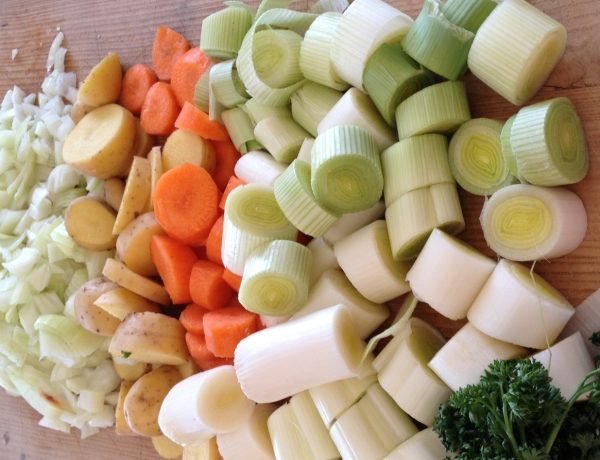
- Lots of vegetables and fruit
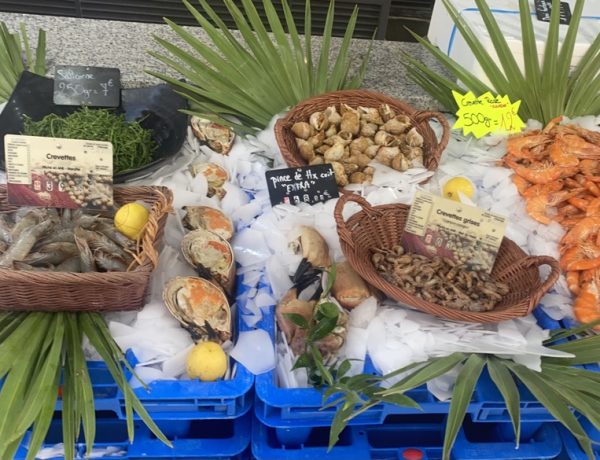
- The best quality whole foods you can afford—good fish, meat, grains, eggs, dairy
- Eating as locally and seasonally as possible
- Water or wine; coffee or tea; occasional fruit juice
- No eating between meals
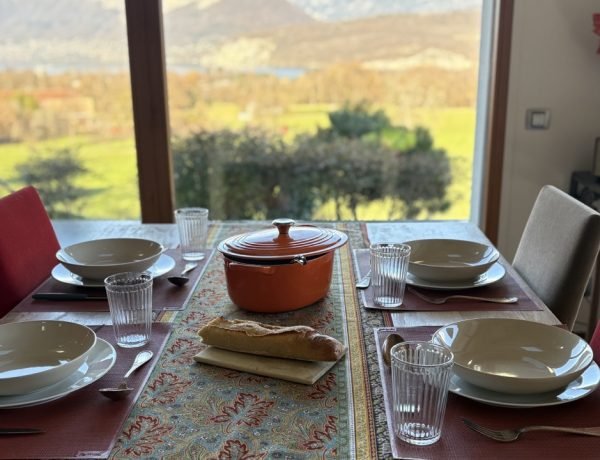
- Two or three proper meals a day (a sandwich eaten while staring at a screen doesn’t count)
- Sugary desserts occasionally, and in small portions
- Daily movement—walking from here to there
- Exercise you actually enjoy, once or twice a week
- A yearly GP visit with routine blood work, plus a specialist if something comes up
If you’re curious about how this shows up on the plate, I’ve written more about it here → French healthy eating habits.
It’s the least sexy list imaginable. And yet—it works.
French people remain active year-round, stay fit well into older age, and are far less likely to be obese—or even significantly overweight.
This way of eating and living overlaps in many ways with what’s often called the Mediterranean diet, which I’ve written about here → Mediterranean diet.
The other game-changing aspect of the French anti-hack system is this: it’s fundamentally safe. You’re unlikely to damage your body by eating real food, moving moderately, and seeing your doctor regularly.
Some people see this as too slow. I used to.
The Best Hack Might Be No Hack at All
But here, health isn’t a destination—it’s a lifestyle. It’s not “before weight loss” and “after weight loss.” Or it’s not “pre-fitness” and “peak performance.” Finally, it’s simply asking, again and again: Is this good for my body, long term?
So maybe the best hack for 2026 is no hack at all.
Maybe patience—choosing long-term gains over short-term results—is the greatest hack there is.
More From France
If you’re curious about how France nurtures healthier habits — from school lunches to everyday food, movement, and wellbeing — I share practical tips and stories each month. Sign up for the free newsletter below and receive my guide, The French Guide to Everyday Wellbeing, straight to your inbox. Merci!