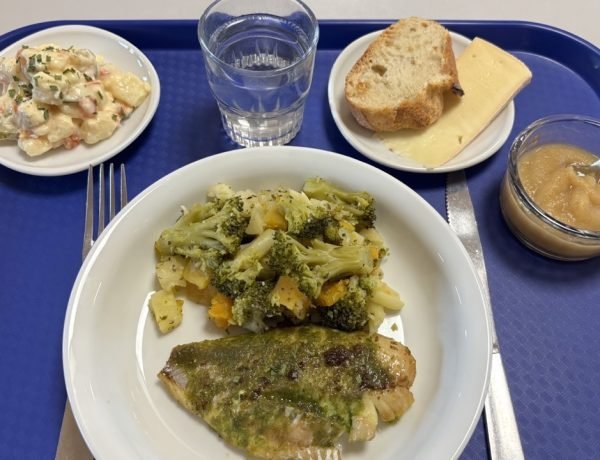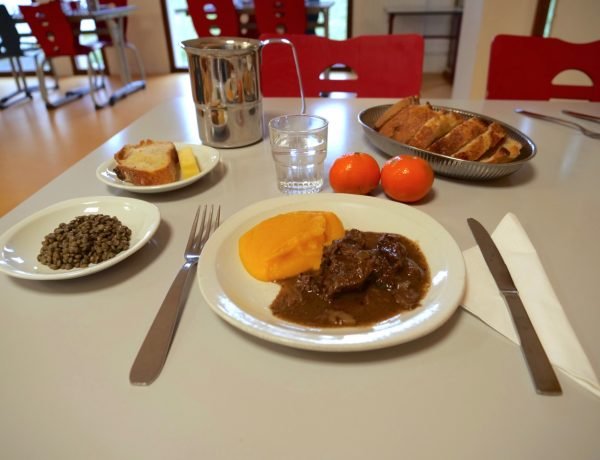
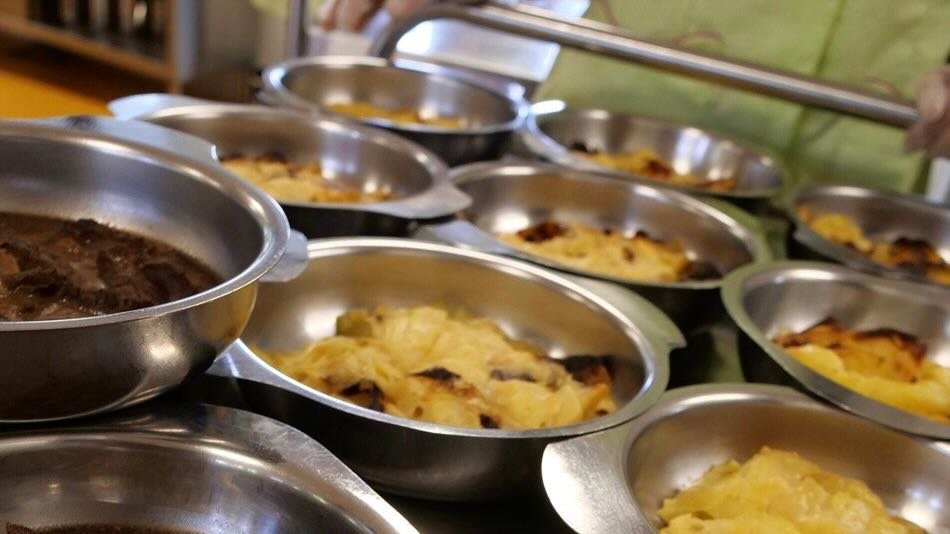

On a recent walk through a French school cafeteria, I watched a group of five-year-olds scrape their plates, sort recycling, and leave almost nothing behind. I stood there amazed. These tiny kids were doing what many adults don’t: eating what was served, cleaning up after themselves, and treating food as something valuable rather than disposable.
The national effort in France to eliminate food waste in school cafeterias is clearly becoming a habit — not just a rule. Just as children eat their vegetables because their classmates do, they also compost their leftovers because that’s simply what everyone does.
And France takes this seriously. Two-thirds of French elementary school children — about 7 million kids — eat at least one school lunch at the cafeteria per week. According to ADEME (the French Agency for Ecological Transition), about 110 grams (3.9 ounces) of food per child is thrown away at school each day. Across all public restaurants — cafeterias, hospitals, nursing homes — France wastes more than 3.8 billion meals per year.
This is why France passed a landmark law in 2016 requiring public school cafeterias to cut food waste by 50% by 2025, with newer legislation (2021) pushing public restaurants to adopt even more innovative solutions.
If you’re new here and want the full picture of how French school lunches actually work – from menus to culture to regulations – I wrote a complete guide here → French School Lunches: How They Work Today.
And if you’re curious about what happens behind the scenes – how the food is cooked, sourced, and prepared – this deep dive into the cantine kitchen will give you the full story → Inside A French School Cafeteria Kitchen.
So how exactly does France plan to eliminate food waste in school cafeterias? Here are the key measures already in place.
1. Knowing Exactly How Many Children Will Eat Each Day
Reducing waste starts with accurate meal counts. Most students are registered for school lunches quarterly or annually, but absences can throw off the numbers. If schools prepare for 200 kids and only 185 show up, waste increases immediately.
Schools are encouraged to:
- Communicate closely with parents
- Require absence notifications
- Adjust menus in real time
The goal: only prepare what will actually be eaten.
2. Serving Portions Adapted to Children’s Ages
French cafeterias use research-based portion sizes. Studies show that children aged 6–11 eat about 300 grams (10.6 ounces) of food, on average.
Portions are aligned to:
- the age of the child
- the type of dish
- real consumption patterns
Less on the plate means less in the bin.
3. Respecting Children’s Tastes (Within a Structured Menu)
French children eat a wide variety of foods because they’ve been introduced to them from infancy. But cafeterias still need to find the balance between:
- offering diverse, nutritious meals
- serving dishes kids will actually eat
France requires cafeterias to rotate at least 20 different meals, which means:
- No child will see the same lunch twice in one month
- No repetitive menus
When children don’t love the day’s meal, supervisors use a simple system:
They ask how much the child is willing to eat and serve that portion. Smaller serving = less waste.
4. Improving the Quality of Meals
Better Food Presentation
In France, food should be appealing. If a child can’t describe what they ate because it looked like “green stuff,” something is wrong.
Cafeterias now improve presentation by:
- adding labels with dish names
- offering photos of ingredients
- explaining where the food comes from
This helps even young children understand what they’re eating.
Choosing Better Quality Ingredients
The best way to ensure children eat their meals? Make the meals delicious.
French public cafeterias must now serve:
- 50% organic and/or local products
- 1 vegetarian meal per week
Buying local, seasonal foods supports farmers, improves taste, and reduces waste.
For details on the nutritional makeup of school lunches, please read → French School Lunch Official Nutritional Guidelines Explained.
5. Creating a Calm, Enjoyable Atmosphere
The French believe that mealtime is not just about what you eat — it’s about how you eat.
School cafeterias often resemble small restaurants:
- small tables instead of long cafeteria rows
- décor and lighting that feel pleasant
- staff working to reduce noise
- emphasis on conversation and calmness
Children are encouraged to take their time.
The government recommends at least 30-40 minutes for lunch from start to finish. Then the kids enjoy another hour of recess.
A calm child is far more likely to eat — and finish — their meal.
For ideas on adapting some of these practices in your school, please read → 8 Tips To Improve School Lunches In Your Community (Inspired by France).
Final Thoughts
Watching French children sort waste and scrape plates showed me something important: eliminating food waste isn’t just a policy — it’s a cultural habit being formed every day at school.
More From France
If you’re curious about how France nurtures healthier habits — from school lunches to everyday food, movement, and wellbeing — I share practical tips and stories each month. Sign up for the free newsletter below and receive my guide, The French Guide to Everyday Wellbeing, straight to your inbox. Merci!